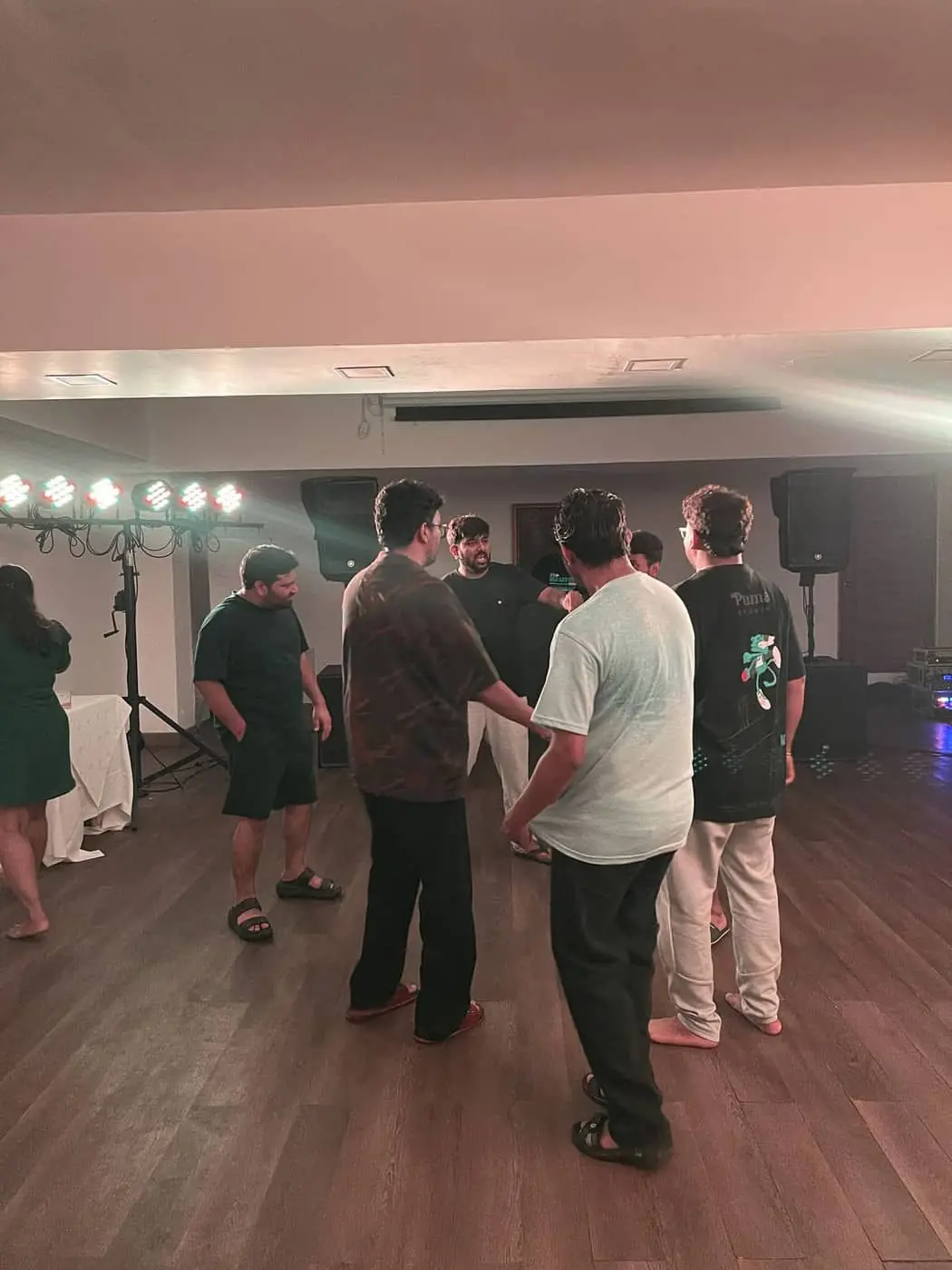

Everyone has sat through an icebreaker that made the room colder. The usual culprit is asking people to perform before they feel safe: share a personal fact with forty strangers, or do something silly with no warm-up. A good icebreaker lowers the stakes instead of raising them.
What makes an icebreaker work
- Everyone takes part at once, so no one is put on the spot alone
- It mixes teams that don't usually talk
- It has a clear, simple goal people grasp in seconds
- It's short, and it leads into whatever comes next
Formats we reach for
Human Bingo gets people moving around the room looking for colleagues who match a square, which turns small talk into a game. Speed Networking pairs people up for quick rounds, ideal when new joiners and old hands are in the same room. One Word Story and the Storytelling Circle build something together, one contribution at a time, so the group finishes with a shared joke.

Then move into team building
An icebreaker is the warm-up, not the workout. Once people are talking, move straight into challenges that need the group to plan and cooperate, like building a paper tower, untangling a human knot or guiding a blindfolded teammate through a minefield. The trust built in the first ten minutes is what makes those work.